
Costs and pricing
Part of Promotional products: budget and quote checks
Promotional merchandise return on investment, cash back or brand lift
How to work out promotional merchandise return on investment in pounds, separating cash recovered from brand value, with a worked England example and glossary.
What to take away
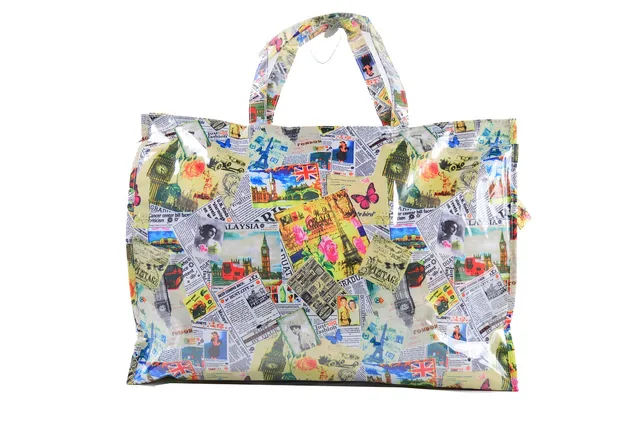
- A Birmingham events team spends £4,800 on 1,200 branded tote bags and tracks two returns: cash recovered and brand impressions.
- Cash return divides incremental gross profit by total spend. Brand lift needs a separate assumption, stated openly.
- Fix the measurement window before the order ships, usually 90 days for a campaign push.
- Count delivery, storage and staff time in the spend figure, not just the unit price.
- Report both numbers, and label the softer one as an estimate.
Define the two returns
Promotional merchandise return on investment is rarely one number. Buyers want cash back through sales, plus visibility that supports later sales.
Cash return is arithmetic: extra gross profit divided by everything you spent. Brand return is a judgement, and should be labelled as one.
Keep them apart, so each assumption can be challenged on its own terms.
Build the spend figure
The spend is not the invoice total. Add delivery to each site, any storage you rent, and internal hours spent choosing and distributing items.
For example, a team paying £400 a month for a storage unit across a three-month campaign adds £1,200 before a single item leaves the shelf.
Still choosing suppliers? The promotional merchandise cost guide in England breaks down where unit prices come from.
Set the measurement window
Pick the window before the order is placed. Ninety days suits a campaign push; six months suits trade show follow-up.
Can you attribute the sale?
Is the sale traceable to the merchandise?
use a discount code on a card insert
say so; an unattributed estimate is honest
Write down what counts as a sale caused by the merchandise. A discount code on a card insert is clean; a logo on a bag handed out at a station is not.
Where you cannot attribute, say so. An unattributed estimate is honest; a fabricated attribution is not.
Work a labelled example
Take the Birmingham events team. Spend: £4,800 on bags, £600 delivery and £1,200 storage. Total £6,600.
Birmingham campaign: the key figures
- £6,600total spend
- £4,320traced gross profit
- 0.65cash return
- 1,200items in circulation
Over 90 days the campaign brings 180 orders traced to a code on the bag tag. At £60 average order value and 40 per cent gross margin, gross profit is £4,320.
Cash return is £4,320 divided by £6,600, or 0.65. The campaign did not pay back in cash inside the window, which is a real result rather than a failure.
The team also recorded 1,200 items in circulation and a rise in branded search. Those belong in the brand column, marked as an estimate.
Separate brand value honestly
Give brand effects a range, not a point estimate. Say visibility is worth between £2,000 and £5,000 in equivalent paid reach, and state what the range rests on.
If you survey, ask about recall rather than intent. Recall is measurable; intent is a story.
Personal data collected through a QR code or sign-up must be handled under the ICO's guide to data protection for organisations.
Check the claim before you publish
Prize draws, discounts and claims about results bring the advertising codes into play. The ASA's AdviceOnline library for marketers covers promotions and incentives.
Consumer law sits alongside that. The CMA's consumer protection enforcement guidance for businesses sets out what happens when claims mislead.
Describe the method plainly.
Report it in one page
Put the spend, traced gross profit, cash return and brand range on one page, plus a line on what you would change next time.
A worked version of that page, with the same arithmetic, sits in the promotional merchandise costs and budget guide for England.
Glossary
- Cash return
- incremental gross profit divided by total spend.
- Gross margin
- revenue minus the direct cost of goods sold.
- Attribution
- the method linking an order to the merchandise that prompted it.
- Measurement window
- the fixed period over which returns are counted.
- Brand range
- a low-to-high estimate of visibility value, labelled as an estimate.
Common questions
What counts as a good cash return?
There is no universal threshold. Above 1.0 means the campaign recovered more gross profit than it cost inside the window. Below 1.0 is common for awareness-led spend.
Should I include staff time in the spend?
Yes, if the hours were spent because of the campaign. Exclude routine marketing work that would have happened anyway, and say which is which.
How long should the window run?
Long enough to catch the buying cycle you are targeting. Ninety days suits short campaigns; trade show follow-up often needs six months. Fix it before the order ships.
Can I compare merchandise with paid ads?
Only on the same basis. Compare cost per traced order, not cost per impression against cost per click.