
Strategy
How to build a promotional merchandise strategy that earns its budget
Plan a promotional products strategy that earns its budget: measurable objectives, budget split, lead times, data compliance under PECR, and review.
What to take away
A promotional merchandise strategy is the written plan that decides which promotional products you buy, who receives them, what job each item does and how you will judge whether it worked. It sits above the individual order.
- Start from a business objective you can measure, such as qualified leads, staff retention or event follow-up, not from a product catalogue.
- Split the budget by purposeacquisition, retention, internal culture. Each needs different items and different volumes.
- Choose the channel before the product. A conference giveaway and a direct mail drop have different weight, cost and data rules.
- Agree lead times and stock cover in writing. Most merchandise failures are timing failures, not design failures.
- Set a measurement method at the planning stage, because most giveaways cannot be tracked after the fact.
Define the objective and the audience
Write one measurable objective
A merchandise plan without a number attached is a shopping list. Decide what changes if the campaign works. It might be 60 extra qualified leads from a trade show, a 10% lift in renewal conversations, or 200 new starters receiving a welcome pack inside their first week.
Write the objective as a sentence with a figure and a date in it. For example, a team might commit to booking 40 meetings from 500 conference giveaways by the end of the quarter. That is an illustrative target, not a benchmark.
Once the number exists, the product choice becomes easier. Low-value items suit volume reach. Higher-value items suit small, named lists where the relationship matters.
Objectives also decide how much choice you keep. A recruitment objective needs a small range that appeals to one job family. A regional brand-awareness objective needs one item in volume, repeated at every touchpoint. Buying ten different products for one audience weakens recognition and complicates stock.
Internal campaigns deserve the same discipline. A welcome kit that lands in week three of employment has lost most of its effect. Set the internal objective against a date the recipient controls, such as their start date or a service anniversary, then work back to the order date.
Build a simple audience picture
You need three facts about the people receiving the goods: who they are, where they are and what they will do with the item. A warehouse team and a board of directors will not value the same object.
Your own records are usually the best source. Sales notes, support tickets and event sign-up lists hold detail that a fresh survey would take weeks to collect. Read them before you buy anything.
Segment the recipients before you set quantities. A conference list, a customer list and a staff list differ in size, in data rules and in value per person. Write each list size on the plan, because it sets the order quantity and the postage budget at the same time.
Our audience research guide for England sets out how to gather those facts from sales, HR and customer service rather than guessing. It covers sample sizes and question wording for small teams.
If the audience is external, check whether you already hold their contact details lawfully. Sending a parcel is a marketing act, and the rules apply to the address data as much as to the item inside.
If the audience is unfamiliar, test with a small group first. Send one item to 50 recipients, then ask two questions: did you keep it, and did you use it? Honest answers at that scale are worth more than a large order placed on taste.
Set the budget and the channel mix
Split the money by purpose
Most merchandise budgets get spent on whatever the last event needed. A three-way split prevents that. Give each purpose a share and a CAP.
| Purpose | Typical share | What it buys |
|---|
The three purposes, and what a share of the budget buys in each:
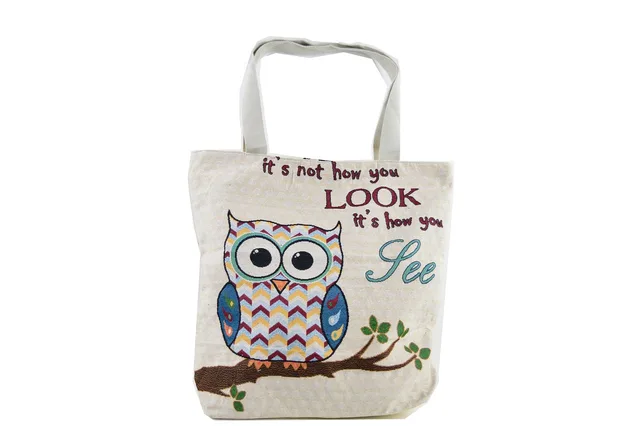
- Acquisitionhigh-volume, low-unit-cost items such as pens, tote bags or mugs, handed out at events and on stands, where reach matters more than longevity.
- Retentionmid-range items sent to named accounts and existing customers, where the relationship justifies a higher cost per recipient.
- Internal culturewelcome packs, long-service gifts and team kit, where the volume is fixed by headcount and the date is fixed by the calendar.
Set each share yourself and treat it as a ceiling, not a target. No published benchmark fits every sector, so start from your own cost per lead and adjust the split to your sales cycle. Keep the three shares inside the overall ceiling for merchandise, such as the 3% to 8% of the marketing budget used as an example in the questions below.
Cost per recipient matters more than unit price. Add decoration, packing, postage and storage before you compare two quotes. A cheap item that needs repacking by hand is not cheap.
Work out cost per recipient on one line. If 500 items cost £3 each, with £400 of decoration, £250 of packing and £300 of postage, the total is £2,450, or £4.90 per recipient. That illustrative figure is what you compare against the value of a lead.
Hold back a contingency, usually 10% to 15% of the merchandise budget. It covers sample costs, a reprint after an artwork error and extra units for late additions to a list. Teams that spend to the last pound usually pay for mistakes out of the next campaign.
Tier the range instead of buying one item for everyone. A low-cost item for the many, a mid-range item for meetings, a higher-value gift for a short list of key accounts. Each tier gets its own brief, quantity and approval.
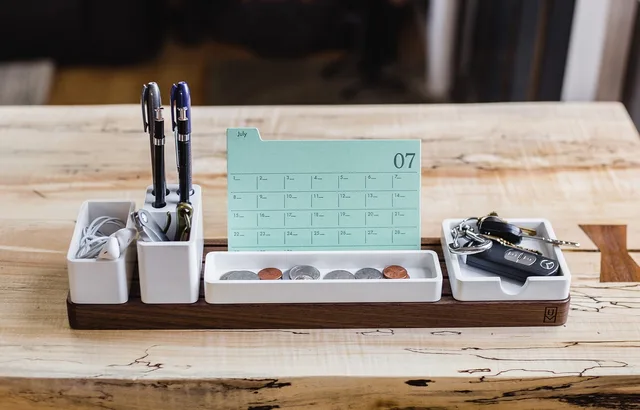
Promotional products fall into a handful of groups, and the group matters more than the individual item. Writing instruments and desk items cover pens, notebooks and diaries. Drinkware covers mugs, bottles and travel cups. Bags cover totes, rucksacks and laptop sleeves.
Apparel covers t-shirts, hoodies and caps, where sizing and stock levels complicate the order. Tech covers power banks, cables, wireless chargers and earbuds, where batteries and safety documentation add lead time. Print and gifting covers calendars, umbrellas and boxed confectionery. Choose the group that fits the objective, not the one with the lowest unit price.
Match channel to item
Each route to the recipient carries its own constraints. A handout at an exhibition allows high volume and low data risk. A postal drop needs accurate addresses, a lawful basis for contact and a returns process.
Our channel strategy guide compares trade shows, direct mail, employee programmes and partner gifting side by side, including the data each one requires. Read it before you commit stock to a single route.
The channel also decides who does the work. Event handouts need staff time on the stand. Postal drops need a fulfilment address and someone to process returns. Add those hours to the plan, even if nobody invoices for them.
For paid support around a drop, follow the platform rules rather than your own instincts. The LinkedIn ads guide explains targeting and format options for business audiences, which is useful when a merchandise send is paired with a paid campaign.
If you are buying search or display support at the same time, the Google Ads best practices cover account structure and quality signals. Merchandise and paid media should share one message, not compete.
Paid media and merchandise do different jobs for the same audience. Advertising buys attention. A physical item buys space on the desk. When both run together, keep the message and the imagery identical so the recipient recognises the source.
Plan production, compliance and rollout
Work backwards from the delivery date
Production is the longest part of most campaigns. Decorated goods can take weeks, and imported stock can take longer. Build the timeline backwards from the date the item must be in someone's hand.
Work backwards from delivery
- Delivery dateitem in recipient's hand
- Before thatphysical sample, brand check, approval round
- Before thatdecoration method and setup confirmed
- Before thatorder placed with lead time in writing
- Throughoutstock buffer held for replacements
Allow time for a physical sample, a brand check and a short approval round. A sample that arrives late removes the chance to fix colour or sizing errors before the full run.
Decoration method changes the lead time. Screen printing, pad printing and embroidery run on different schedules, and the number of colours affects the setup. Laser engraving suits metal and drinkware and survives washing and handling better than a printed logo. Ask for the method to be named in the quote — screen printing, pad printing, embroidery or laser engraving — so you can compare like with like.
Our ninety day plan for England sets out a week-by-week schedule you can copy, including the points where orders usually slip. It is written for teams running a first campaign without a dedicated buyer.
Keep a stock buffer for replacements. Damaged or lost items during a campaign are normal, and a small reserve prevents a second, uneconomic print run.
Decide where stock will live before it arrives. A pallet in a corridor creates its own problems. Name the storage location, the person who releases stock and the reorder threshold. On a 500-unit run, a reserve of 25 units is normally enough.
Ask suppliers three questions before ordering. Can they show samples of the exact decoration method? What is the confirmed production slot? Who pays if the delivery date slips? Written answers make the later conversation shorter.
Choose the supplier before the product. UK suppliers fall into two groups: distributors, who source and decorate on your behalf, and manufacturers or decorators who print, embroider or engrave in house. The British Promotional Merchandise Association (BPMA) is the trade body for the sector, and its member directory is a sensible starting filter. Beyond that, ask for the company's registered name and number, a named account manager, UK-held stock for lines you plan to repeat, and at least two references from campaigns of a similar size.
Artwork approval is usually the hidden delay. Check that the logo sent to the printer is the current version, that the colour reference is written down, and that the approver is available during the production window.
Check the rules before you print
Two areas cause most problems: data and claims.
If you are contacting people to send them something, two laws apply: the UK GDPR and the Privacy and Electronic Communications Regulations (PECR). The Information Commissioner's Office (ICO) enforces both, and the lawful basis for the contact, the soft opt-in and opt-out handling all matter before you use a list. The ICO's step-by-step guide to direct marketing for your small business explains consent, soft opt-in and opt-out handling in plain terms.
Keep the evidence, not just the permission. If a recipient opted in, the record needs the date, the source and the wording they agreed to. That record is what protects you if a complaint arrives months later.
If the item carries a claim, such as a recycled content figure or a performance promise, the wording must be accurate and evidence-backed. The introduction to creative best practice from IAB UK is a useful check on how claims and creative are read by audiences.
Environmental wording needs proof before artwork is signed off. If an item is described as recycled or plastic-free, keep the supplier's evidence on file. Vague green wording invites a complaint, and the item itself becomes the advertisement.
Claims are regulated in the UK. The CAP Code, enforced by the Advertising Standards Authority (ASA), covers advertising and sales promotion, and the Competition and Markets Authority's Green Claims Code covers environmental statements. Keep the supplier's certificate or test report in the same file as the artwork so the evidence travels with the order.
Company structure and trading arrangements sit outside marketing, but they affect invoicing, VAT and contracts with suppliers. GOV.UK's business and self-employed guidance is the starting point for the administrative side.
Measure, review and improve
Pick a method you can actually run
Most merchandise cannot be tracked to a sale. Choose a proxy you can collect without extra work. Options include unique landing pages, reply cards, QR codes with their own tracking, or a question asked at the next sales call.
Give every item a way back to you. A QR code, a short URL or a printed reply address all create a measurable signal. Without one, you depend on memory in a sales meeting, which rarely survives a busy quarter.
Record a baseline before the campaign starts. If you do not know last quarter's meeting booking rate, you cannot judge this quarter's.
Keep the measurement simple enough to survive a busy month. One metric per purpose is enough for a first cycle.
Report in the language the budget holder uses. If the objective was meetings booked, report meetings booked, not items dispatched. A page of activity data rarely protects next year's spend.
Justify the spend with one ratio: cost per lead. Take the total campaign cost — unit price plus decoration, packing and postage, using the £2,450 example above — and divide it by the number of results your proxy counted. Compare that figure with what a lead, a renewal or a hire is worth to the business.
Review before you reorder
Hold a short review within four weeks of the final delivery. Ask three questions: did the item get used, did the objective move, and what would we change?
Invite sales, HR and whoever packs the parcels to the review. Each group sees a different failure: late delivery, wrong sizing, unclaimed stock. Write one action against each finding and give it a date.
Write the answers down. Repeat orders are where money is quietly wasted, because nobody rechecks whether the item still fits the audience.
A pilot round of 100 items will not prove a campaign works at scale. It will show whether the item survives normal use and whether recipients can explain why they received it. Those two answers decide the next order.
Common failures repeat across teams. Our guide to promotional merchandise strategy mistakes lists the ones that cost the most, from buying before briefing to ignoring storage costs.
Compare the outcome with the objective set at the start, not with a general feeling about the campaign. If the item went down well but no meetings appeared, the item is not the problem. Look again at the list, the message and the timing of the send.
Record the result even when disappointing, because a failed format is worth as much to the next plan as a successful one.
Keep the plan and the actual figures in the same file. Unit prices, postage and response rates drift from year to year, and a two-year comparison is more useful than a single campaign report.
Use a written plan for the next cycle rather than memory. Our promotional merchandise planning template gives you a one-page structure covering objective, audience, budget, timeline and measurement.
Pre-launch checklist
Work through this before any order is placed.
Pre-launch checklist
- Objective with figure, date and owner
- Audience defined with lawful contact route
- Budget split and cost per recipient calculated
- Three quotes compared on total landed cost
- Physical sample approved by brand and user
- Lead times confirmed with replacement buffer
- Measurement method agreed and baseline recorded
Common questions
How much should a small business spend on promotional merchandise?
There is no published benchmark that fits every sector. A workable approach is to set a share of the marketing budget, often between 3% and 8%, and treat it as a ceiling rather than a target. Those percentages are illustrative examples, so test them against your own cost per lead.
How long does a branded merchandise campaign take to plan?
For decorated stock from a UK supplier, allow six to eight weeks from brief to delivery, and longer if items are imported or need tooling. A first campaign should start twelve weeks out. The schedule in our ninety day plan builds in the approval and sample stages that most teams underestimate.
Can we send merchandise to people who have not opted in?
Sometimes, but the rules are specific. Business-to-business contact has different treatment from consumer contact, and the soft opt-in applies only in limited circumstances. Check the ICO guidance for your situation before you buy a mailing list or reuse old customer data.
How do we prove merchandise was worth the money?
Use a proxy measure agreed in advance, such as tracked landing page visits, meetings booked or survey responses. Compare it with a baseline from the previous period. If no baseline exists, run a small pilot first and treat the first cycle as a learning round.
In this guide
- Promotional merchandise strategy framework: score items by cost per contactScore promotional merchandise strategy options by cost per contact, with a worked tote and bottle example, take-up rates, waste and a 90-day review.
- What to include in a promotional merchandise planning templateWhat to include in a promotional merchandise planning template: objectives, audience, VAT checks, compliance, distribution, timelines and a checklist.
- Three promotional products sourcing routes for UK teamsDirect, distributor and hybrid promotional products routes compared for UK teams, with a five-step selection sequence and compliance checks.
- Promotional products: strategy mistakes for UK buyersAvoid promotional products strategy mistakes with checks on objectives, quote comparisons, CAP Code promotions, data protection and delivery planning.
- A promotional merchandise ninety day plan keeps a small budget honestA promotional merchandise ninety day plan turns a vague branding idea into dated decisions, a scoring rubric, legal checks and a first review date.