Outlook
Seasonal promotional merchandise in the UK compared across trade show calendars
Promotional products in the UK follow the trade show calendar: spring launches, summer outdoor events, autumn conferences, winter gifting and weather risk.
What to take away
- Promotional products in the UK follow a predictable rhythm set by the trade show calendar, not by the retail calendar.
- Spring orders peak for events such as Spring Fair and the London Book Fair; summer favours outdoor kit for festivals and sports days.
- Autumn is conference season, so notebooks, laptop sleeves and printed lanyards lead; winter turns to gifting and delivery deadlines.
- Weather patterns shift the mix more than most buyers expect, especially in Scotland, Wales and Northern Ireland.
- Unit costs move with order timing and quantityearly bulk orders for spring and winter usually price better than late summer top-ups.
- Lead times stretch in November and December, so plan winter gifting against named delivery windows, not hopes.
Mapping the UK trade show calendar to merchandise seasons
The UK trade show calendar does more to shape promotional merchandise demand than any marketing plan. Buyers order what the next event needs, and the next event is rarely more than a quarter away.
UK trade show merchandise seasons
- SpringSpring Fair NEC, London Book Fair
- SummerBBC Good Food Show, festivals, country shows
- AutumnParty conferences, CIPD Manchester, NEC
- WinterClothes Show, Christmas fairs, awards dinners
Spring belongs to retail and publishing. Spring Fair 2026 at the NEC in Birmingham runs in the first week of February and pulls buyers from the West Midlands and beyond. The London Book Fair 2026 follows in mid March at Olympia, and the Ideal Home Show 2026 overlaps it at Olympia in late March and early April.
Spring orders should be placed by December for sea freight.
Summer is outdoor and regional. The BBC Good Food Show, country shows and agricultural events across Yorkshire, Scotland and Wales run from June to August and drive caps, bottles and sunscreen. Festivals along the South East England coast run from May to September and add lanyards and tote bags. Summer orders should be placed by April for sea freight.
Autumn is conference season. Party conference season in late September and early October, with the Labour and Conservative conferences, and sector events such as the CIPD Annual Conference and Exhibition in Manchester in early November, fill the calendar. So does the Birmingham NEC's autumn run. Autumn orders should be placed by July for sea freight.
Winter is gifting and awards. The Clothes Show and seasonal consumer events give way to corporate Christmas fairs and awards dinners in Greater London and Greater Manchester from late November. Winter gifting orders should be placed by late September for sea freight, or by the first week of November for air freight.
Read the calendar backwards and the merchandise plan writes itself. Each show has a buying window, and each buying window has a production lead time. Miss the window and the only option left is express shipping at a premium.
A planning template that maps shows to order dates removes most of that risk. It also makes the seasonal cost comparison in section six meaningful rather than theoretical.
Spring promotional products and the shows that drive them
Spring merchandise is about newness. Buyers want items that feel fresh after a grey January, and the shows reward colour, lightweight materials and low unit costs.
Spring Fair at the NEC sets the tone in the first week of February. Exhibitors and visitors both need branded bags, badges and lanyards within days of the show opening, so orders land in December and January.
The London Book Fair in mid March at Olympia is a different animal. Publishers and agents want notebooks, pens and tote bags that look considered rather than cheap. Recycled board covers and UK-printed notebooks sell well here.
The Ideal Home Show at Olympia in late March and early April overlaps the book fair and pushes homeware-adjacent merchandise: seed packets, tea towels, aprons and reusable shopping bags.
Regional shows matter too. Events in the West Midlands and Greater Manchester draw local suppliers who can turn orders around quickly without long freight times.
Spring weather is the wildcard. A cold March keeps demand for fleeces and umbrellas; a warm April shifts it to caps and water bottles. Buyers in Scotland and Northern Ireland should hedge more than those in the South East England.
Spring unit costs sit in the middle of the year's range. Factories in China and India are past their post-Lunar New Year restart, so capacity is available, but air freight is still expensive if you miss the sea freight cut-off.
That makes spring a good season for considered bulk orders rather than panic buys. The 2027 trends outlook for England buyers tracks the shift towards recycled cotton and rPET in spring ranges.
Summer outdoor and event merchandise choices
Summer merchandise is durable merchandise. Anything that cannot survive rain, sun and a field is the wrong product.
Festivals dominate. Glastonbury in late June, Reading and Leeds in late August, and the Edinburgh festivals in August all generate demand for lanyards, ponchos, tote bags and reusable cups. Sponsors order these in volume, often with tight brand guidelines.
Sports days and charity runs add technical fabrics. Moisture-wicking tops, sports bottles and drawstring bags are standard. So are medals and printed bibs for corporate charity events.
Country shows across Yorkshire, Scotland and Wales favour practical items: canvas bags, waxed cotton caps, picnic blankets and branded sun cream. These buyers care about durability more than novelty.
Summer weather patterns are the biggest variable in the whole year. A wet July pushes ponchos and umbrellas; a hot July pushes bottles, caps and fans. Buyers who order only one version usually regret it.
Costs rise in summer for two reasons. First, air freight capacity tightens as consumer demand peaks. Second, many factories run summer maintenance or holiday shut-downs, which stretches lead times.
The practical answer is to split orders. Place the core order in spring for sea freight, then hold a small express budget for weather-driven top-ups in June and July.
Summer is also when retail data matters most. The Retail industry data from the ONS gives monthly sales volumes, which helps show how weather-sensitive UK consumer spending is, but it is not a direct forecast for promotional merchandise.
Autumn conference and back-to-work branded merchandise
Autumn is the busiest season for corporate merchandise in the UK. Everyone returns from summer leave and books conferences, kick-offs and training days.
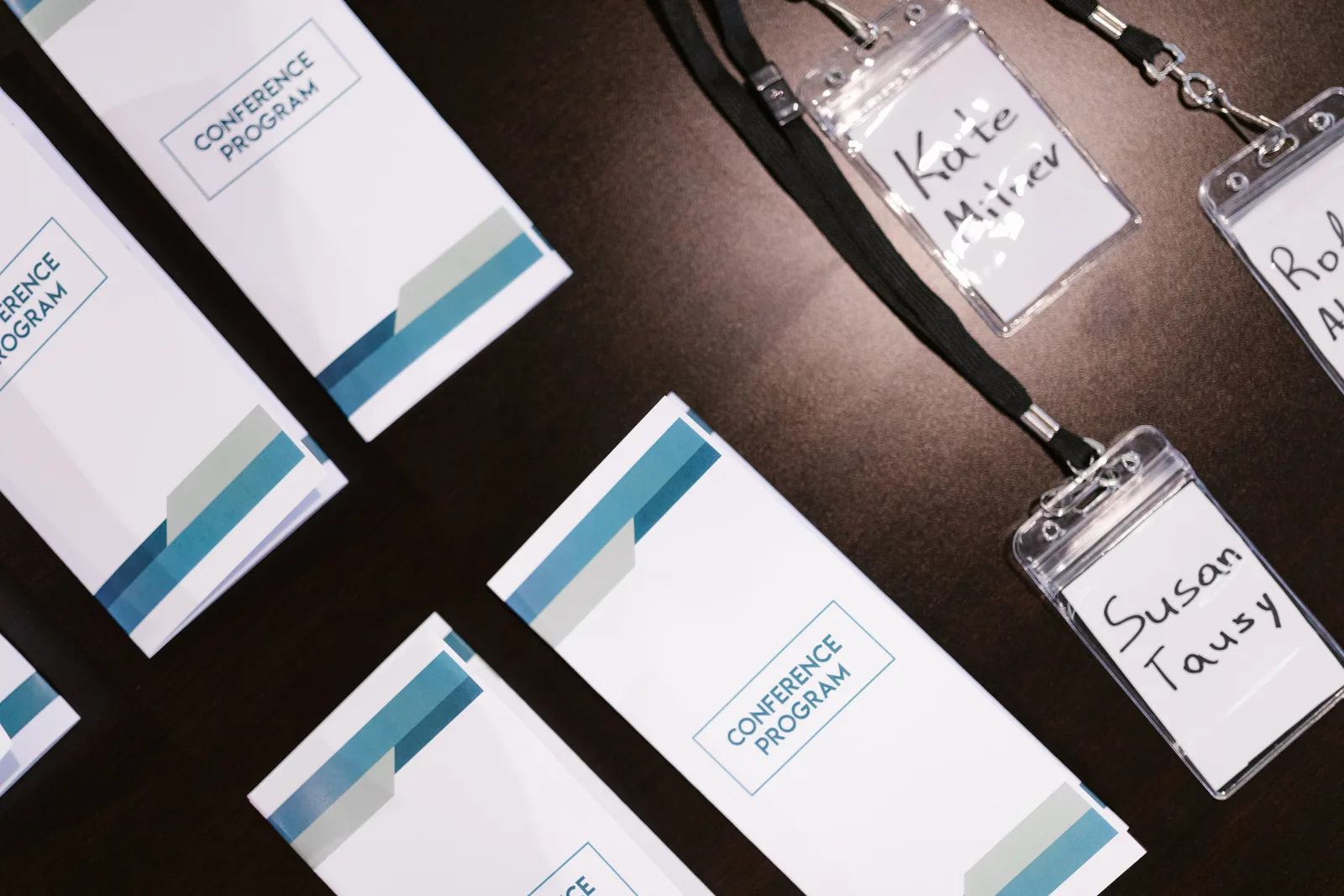
Party conference season in late September and early October drives lanyards, badges, folders and branded water bottles at scale. Venues in Greater Manchester, Birmingham and London host most of it.
The CIPD Annual Conference and Exhibition in Manchester in early November is a good example of a sector event with heavy merchandise needs: notebooks, pens, tote bags and stand giveaways.
Back-to-work merchandise is quieter but steadier. New starters need welcome packs: mugs, notebooks, laptop sleeves and branded hoodies. HR teams order these in September and October.
Autumn weather patterns are mild but unsettled. Rain in October and November makes umbrellas and waterproof jackets reliable sellers, especially in Scotland, Wales and Northern Ireland.
Costs in autumn are competitive for print but tight for garments. Screen printing and embroidery capacity fills quickly, so book early. Garment blanks are usually still available at reasonable prices.
Autumn is also when buyers should weigh up demand signals across the year, because conference spending is often the first budget line to be trimmed when confidence falls.
Inflation and price indices from the ONS matter here. When input costs rise, suppliers pass them on in autumn quotes more readily than in spring, because demand is stronger and buyers have less room to negotiate.
Winter gifting, weather risk and delivery windows
Winter is gifting season, and gifting is a deadline business. A gift that arrives on 20 December is worth more than the same gift on 3 January.
Corporate Christmas fairs and awards dinners in Greater London and Greater Manchester from late November drive premium gifting: engraved glassware, leather notebooks, hampers and branded tech accessories.
Client gifting peaks in November. Orders placed after the first week of December usually need express couriers, and courier capacity is unreliable in the run-up to Christmas.
Weather risk is real. Snow and ice in Scotland and northern England can delay deliveries by days, and no supplier can guarantee a date through a closed motorway.
The safe approach is to set delivery windows, not delivery dates. Tell recipients a range, order early, and keep a small reserve of unprinted stock for late additions.
Costs in winter are the highest of the year for express work. Air freight, couriers and overtime printing all cost more. Bulk sea freight ordered in September is the cheaper route.
Winter is also when the trends and outlook shift fastest, because gifting budgets are set late and suppliers hold less stock than they would like.
Comparing seasonal unit costs across the year
Seasonal cost comparison is not about one price list. It is about four variables: order timing, quantity, decoration method and freight mode.
Seasonal cost and lead-time comparison
Spring
- Lead time
- 4-6 weeks
- Freight pressure
- Moderate
- Decoration capacity
- Good
- Relative unit cost
- Medium
Summer
- Lead time
- 3-5 weeks
- Freight pressure
- High
- Decoration capacity
- Good
- Relative unit cost
- Medium-high
Autumn
- Lead time
- 4-6 weeks
- Freight pressure
- Moderate
- Decoration capacity
- Tight
- Relative unit cost
- Medium
Winter
- Lead time
- 2-4 weeks
- Freight pressure
- Very high
- Decoration capacity
- Tight
- Relative unit cost
- High
A 500-unit order of a printed tote bag behaves differently from a 50-unit order of an engraved award. The table below shows indicative trade ranges for 500 printed tote bags, not fixed prices.
Comparing seasonal unit costs
Typical lead time
- Spring
- 4 to 6 weeks
- Summer
- 3 to 5 weeks
- Autumn
- 4 to 6 weeks
- Winter
- 2 to 4 weeks
Freight pressure
- Spring
- Moderate
- Summer
- High
- Autumn
- Moderate
- Winter
- Very high
Decoration capacity
- Spring
- Good
- Summer
- Good
- Autumn
- Tight
- Winter
- Tight
Indicative unit price for 500 printed tote bags
- Spring
- £1.60 to £2.80
- Summer
- £1.90 to £3.20
- Autumn
- £1.70 to £2.90
- Winter
- £2.40 to £4.50
Relative unit cost
- Spring
- Medium
- Summer
- Medium to high
- Autumn
- Medium
- Winter
- High
These are indicative trade ranges, not quotations. Fabric weight, print colours, decoration method and freight mode change the figure.
Spring and autumn are the value windows. Factories have capacity, sea freight is predictable, and buyers can negotiate on quantity.
Summer costs rise mainly through freight, not production. Winter costs rise through express freight, overtime decoration and courier surcharges.
A worked example makes this concrete. Suppose a UK buyer needs 1,000 branded notebooks for an October conference.
Comparing seasonal unit costs
- Order in June for sea freight and standard printing; expect the lowest unit cost and a comfortable lead time.
- Order in August for air freight and standard printing; expect a higher unit cost and a tighter window.
- Order in September for express printing and courier delivery; expect the highest unit cost and real risk of a missed date.
Indicative prices for 1,000 notebooks are about £2.20 to £2.80 each in June by sea freight, and about £3.80 to £5.00 each in September by express. The delta is roughly £1,000 to £2,800 on the order. That is the whole argument for seasonal planning.
Use a planning template to compare quotes on the same basis: unit cost, decoration, freight, lead time and delivery window.
How weather patterns change what buyers order
Weather patterns do not just affect what people wear. They affect what buyers order, when they order it and how much they pay.
Regional weather merchandise split
Scotland, Wales, NI
- Rain-ready items
- Umbrellas, waterproofs
- Lighter items
- Caps, bottles
- Buying trigger
- Wet forecasts
South East England, London
- Rain-ready items
- Ponchos, sealed bags
- Lighter items
- Tote bags, caps
- Buying trigger
- Warm forecasts
UK weather is regional, not national. A wet week in Glasgow and a dry week in London can sit in the same forecast period, so a single national merchandise plan is usually wrong.
Scotland, Wales and Northern Ireland skew towards rain-ready items: umbrellas, waterproof jackets, ponchos and sealed bags. South East England and Greater London skew towards lighter items: caps, bottles and tote bags.
Seasonal buying responds to forecasts, not to seasons. A warm September delays hoodie orders; a cold May accelerates them. Suppliers who watch the forecast gain an edge.
CIM insight on marketing trends across the seasonal cycle is useful here, because it shows how campaign timing shifts when consumer behaviour shifts.
There is a compliance angle too. Claims about recycled content or weather performance must be accurate, and customer data rules apply to merchandise campaigns.
Import duty and product safety rules affect landed cost, so they can change which seasonal option is cheapest. What changes with the weather is the mix, the timing and the price.